
Why Boutique Residential Buildings Are Redefining Luxury Living in Los Angeles
- Luxury buyers are increasingly prioritizing boutique residential communities.
- Privacy, architectural integrity, and neighborhood integration are replacing mega-amenity towers.
- The Harland West Hollywood reflects this shift with a community of just 37 residences.
- Predominantly townhome living blends private home comfort with boutique building services.
- Amenities are evolving from scale-driven to lifestyle-driven experiences.
Over the past two decades, luxury residential development in Los Angeles has largely been defined by scale. Towers grew taller, amenity decks expanded, and shared spaces became increasingly elaborate, often mirroring the experience of hospitality-driven living.
Today, a different model of luxury is emerging — one centered around boutique residential communities designed for privacy, architectural integrity, and a more personal relationship to daily living.
The Harland West Hollywood represents one of the clearest expressions of this shift.
The Evolution of Luxury Living
Luxury housing in Los Angeles has historically reflected broader lifestyle trends. In the early 2000s, buyers gravitated toward high-rise living defined by expansive amenity programs, concierge services, and vertical density.
More recently, luxury buyers have begun prioritizing a different kind of experience—one that preserves convenience while reintroducing the privacy and individuality traditionally associated with single-family homes.
This evolution reflects a growing desire for residential environments that feel curated rather than crowded, where architecture, services, and amenities support daily living rather than overwhelm it.
Why Buyers Are Moving Toward Boutique Residential Communities
Several forces are shaping this shift toward smaller, design-driven residential buildings across Los Angeles.
Privacy and Personal Scale
Boutique buildings naturally reduce shared circulation, elevator congestion, and residential density. Residents experience greater separation between homes while maintaining access to shared services and amenities.
Architectural Integrity
Smaller residential communities allow architects and designers to focus more deeply on materials, spatial flow, and experiential quality. Buildings are often designed with a level of intentionality that becomes difficult to achieve at larger scales.
Residential Character and Neighborhood Connection
Smaller developments frequently prioritize integration with surrounding neighborhoods rather than creating isolated vertical environments. This approach allows residents to feel connected to the city while maintaining a strong sense of home.
Amenities Designed for Lifestyle, Not Volume
Perhaps the most significant evolution in residential design is how amenities are conceived. Instead of competing through quantity, boutique buildings increasingly focus on how amenities support everyday routines, entertaining, and wellness in more personal and usable ways.
The Harland: A Case Study in Boutique Residential Design
The Harland West Hollywood was designed around these changing priorities.
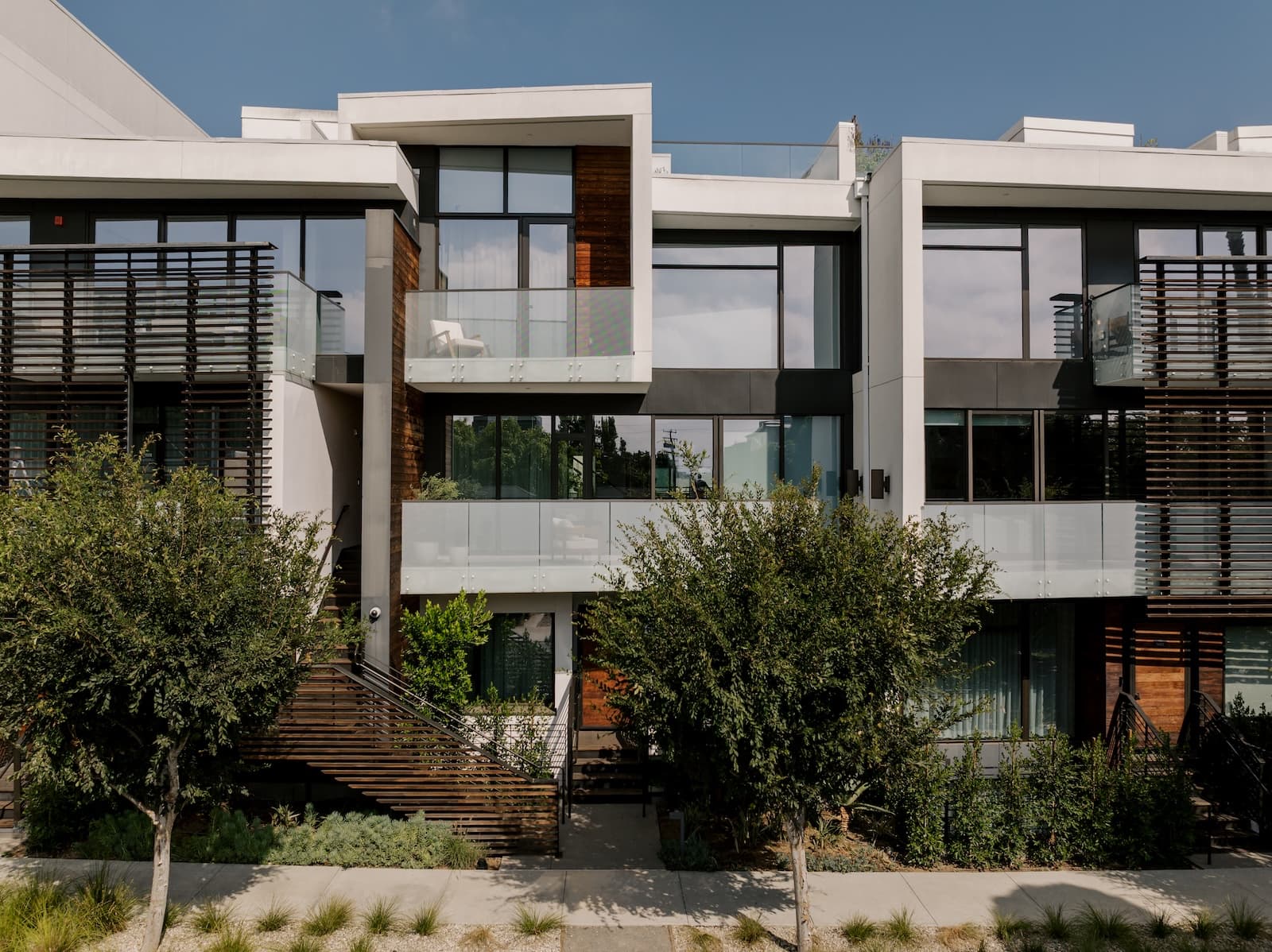
Rather than organizing the community around stacked flats, the building is defined primarily by Townhomes positioned along Harland and Keith Avenues. This planning strategy introduces a residential scale rarely found in urban luxury developments while allowing residents to experience private entries, multi-level living, and direct neighborhood connection.
At the same time, The Harland complements this residential intimacy with a curated amenity and service program designed to support modern urban lifestyles without compromising privacy.
Townhomes as a Bridge Between Home and Building
The Harland’s predominantly Townhome offering reflects one of the most compelling emerging residential typologies in Los Angeles — the hybrid home.
Townhomes allow residents to enjoy many of the benefits of single-family living, including multi-level layouts, private outdoor spaces, and individualized entrances, while still benefiting from shared services and lifestyle amenities typically associated with full-service residential buildings.
This hybrid approach is particularly appealing to buyers transitioning from larger homes, relocating from other major metropolitan markets, or seeking second residences that feel permanent and residential rather than transient or hospitality-driven.

Amenities Reimagined for Boutique Living
The Harland also reflects a broader shift in how luxury amenities are designed and experienced.
Rather than emphasizing scale alone, the building introduces more than 9,300 square feet of lifestyle and wellness spaces intentionally designed around social connection, recreation, and daily ritual. These include entertainment lounges, private dining and exhibition kitchen spaces, screening and recreation rooms, and wellness-focused fitness and yoga environments.
Importantly, these spaces are supported by hospitality-inspired services such as attended lobby support, in-home delivery coordination, and preferred lifestyle service partnerships — conveniences designed to simplify daily routines while maintaining discretion and security.
This approach represents a new interpretation of luxury amenities: less about spectacle, and more about how spaces and services quietly enhance everyday living.
Design Pedigree and Case Study Influence
The Harlands’ architectural philosophy draws from the Case Study House program, one of California’s most influential residential design movements. The Case Study program emphasized livability, indoor-outdoor continuity, and architectural clarity — principles that continue to shape contemporary residential design throughout Los Angeles.
By applying these ideas to a boutique multifamily setting, The Harland creates residences that feel open, layered, and connected to light and landscape while maintaining the privacy and retreat expected of modern luxury homes.
The Future of Urban Luxury Living
As Los Angeles continues to evolve, boutique residential communities are expected to play an increasingly important role in luxury housing.
Buyers are increasingly seeking environments that balance convenience with individuality — places that offer architectural integrity, curated amenities, and long-term livability rather than simply maximizing density or amenity scale.
Buildings like The Harland represent this next chapter of urban residential design, where success is measured not by height or unit count, but by the quality of experience, craftsmanship, and residential authenticity.
A New Definition of Luxury
Luxury living in Los Angeles is no longer defined solely by expansive amenity decks or vertical skyline presence. Increasingly, it is defined by privacy, design intention, and homes that reflect how residents truly live.
The Harland West Hollywood embodies this evolution, offering a modern enclave where townhome living, architectural pedigree, curated amenities, and neighborhood connection come together in a distinctly California expression of luxury.