In Conversation with OFFICEUNTITLED Architect Christian Robert
- The Harland is a boutique collection of 37 residences, led by a predominant offering of Townhomes, alongside Flats and Penthouses.
- Its architecture was designed by OFFICEUNTITLED with interiors by Marmol Radziner.
- The project blends private-home living with boutique building amenities and services.
- The architecture responds to both Doheny Drive and quieter residential side streets.
- Inspired by Case Study design principles prioritizing light, openness, and livability.
This is the first in a new blog series titled In Conversation With, where we interview the visionaries behind The Harland and explore what makes West Hollywood one of the most design-forward and culturally influential neighborhoods in Los Angeles.
Today, we speak with Christian Robert, principal at OFFICEUNTITLED and the architect behind The Harland West Hollywood. Over more than a decade of design and development, Christian and his team created a residential concept that reimagines boutique urban living through privacy, walkability, and a predominantly townhome experience rarely found in Los Angeles.
Q: When you first began studying the site, what stood out to you and began shaping the architectural approach?
A: What made the site so compelling was that it sat between two very different conditions. Along Doheny, you have movement, visibility, and views outward. Along Harland and Keith, you have quieter residential streets with a completely different rhythm. From the beginning, we wanted the building to respond to both environments in a meaningful way.
Q: What was the larger vision you wanted The Harland to achieve?
A: We wanted to combine the amenities and service expectations of a luxury high-rise with the benefits of living in your own private home, while still allowing residents to step directly into the neighborhood and experience walkable urban living.
“We wanted to combine the amenities and service of a high-rise with the benefits of having your own private home.”
Q: The Harland is predominantly composed of Townhomes. Why was that such an important architectural decision?
A: The side streets called for a more intimate and residential response. The Townhomes create a direct connection to the street and allow residents to live in a way that feels grounded and connected to the neighborhood, rather than isolated in a traditional stacked condominium building.
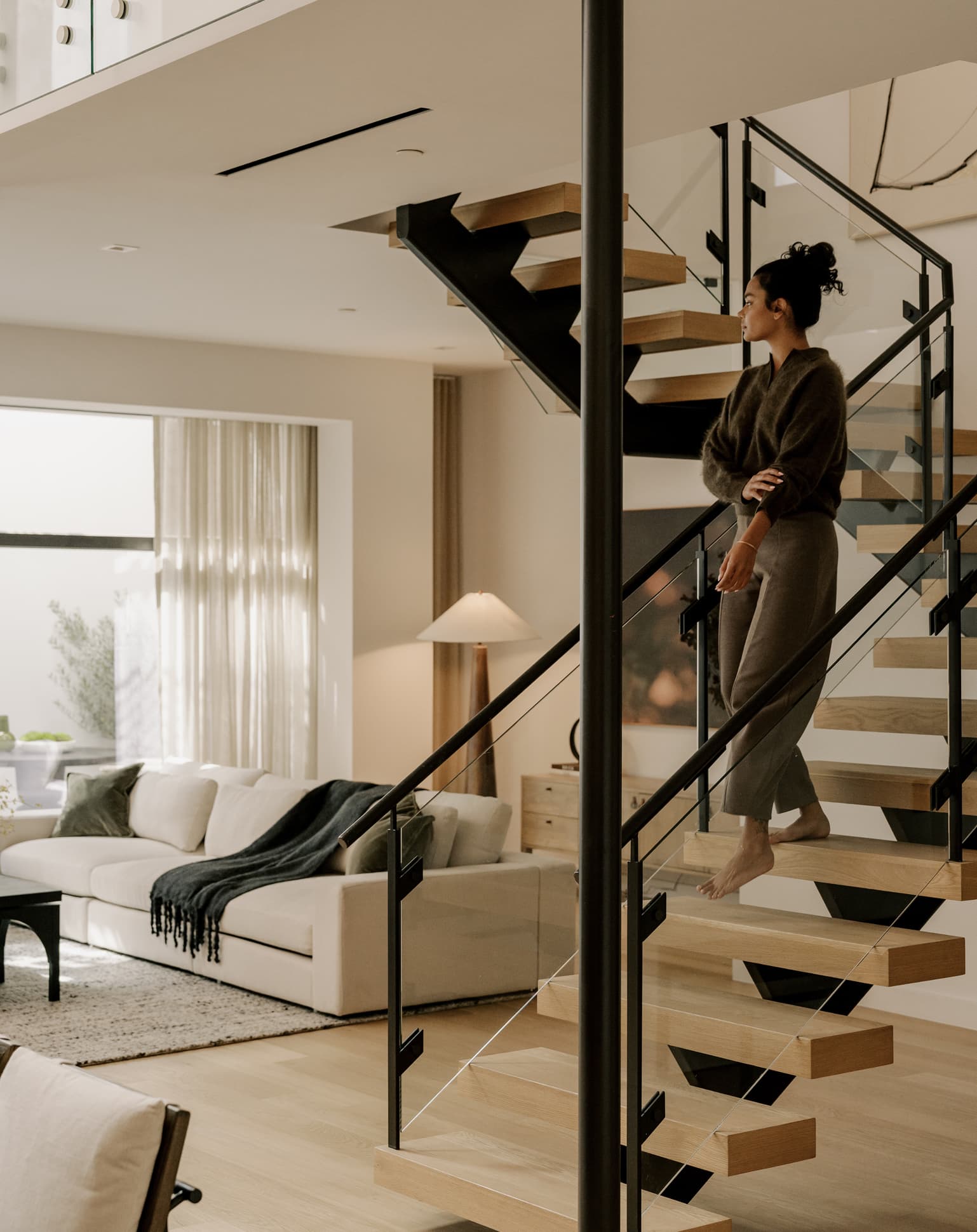
They also allowed us to create interior spaces that feel closer to single-family homes, including double-height living volumes and layered private outdoor spaces.
Q: How do the Townhomes change the daily living experience compared to a conventional condo building?
A: They create multiple ways to arrive and move through the building. Residents can enter through private or semi-private elevators, walk directly in from the street, or move through the courtyard. That flexibility changes how you experience the building day to day.
“It’s almost like taking a high-rise and slicing it into smaller homes, giving each one its own identity.”
Q: The building has been described as having two architectural personalities. How did that develop?
A: Along Doheny, the building responds to speed and outward views. It’s more urban and extroverted. Along the side streets, the architecture becomes quieter and more residential. The Townhomes reinforce that sense of scale and intimacy while remaining connected to the building’s overall design language.
Q: The courtyard plays a central role in the project. What was the intention behind it?
A: The courtyard was designed to function as a calm interior oasis rather than a traditional activity-driven amenity space. It brings the landscape, light, and greenery into the center of the building and creates visual serenity for the surrounding residences.
Instead of centering it around a pool or a heavy program, we wanted it to feel almost like a garden, with residents experiencing it visually as they move through the building.
Q: The Harland is very open and glass-forward, yet it still feels private. How did you balance those two goals?
A: That balance was one of the most important parts of the design. We used layered screening, angled balconies, and offset floor plans to allow light and openness while maintaining privacy. Residents can experience expansive glazing and indoor-outdoor living without feeling exposed to neighbors or shared amenity spaces.
“The challenge was creating a building that feels open and filled with light, yet still gives residents a strong sense of retreat.”
Q: The building references the Case Study House program. How did that influence the architecture?
A: The Case Study program was about experimenting with new ways of living and connecting the interior and exterior space. We weren’t interested in replicating the aesthetic directly. Instead, we focused on the philosophy — clarity of structure, openness, cross-ventilation, and flexible living environments.
Those principles influenced the floor plans, façade articulation, and how residents interact with outdoor space.
Q: The material palette feels warm and restrained. What guided those selections?
A: We wanted materials that age gracefully and develop character over time. The bronze-toned metals, treated woods, and layered screening systems help filter light while also giving the building warmth and depth. We wanted the building to feel timeless rather than trend-driven.
Q: You collaborated with Marmol Radziner on the interiors. How did that partnership shape the final result?
A: Marmol Radziner served as the design architect for the interiors and helped refine finish palettes and interior detailing. OFFICEUNTITLED led the building design, planning, and architectural concept, and then we collaborated closely through the development process to ensure the architecture and interiors felt cohesive and continuous.
Q: How does designing a boutique-scale building like The Harland differ from designing a larger multifamily project?
A: Boutique scale allows a deeper level of attention to detail and experience. It allows us to think about the tactile quality of materials, arrival sequences, and spatial transitions in a much more refined way. It becomes less about repetition and more about crafting a complete residential experience.
Q: What feeling did you ultimately want residents to experience when they arrive home?
A: We wanted residents to feel a sense of calm and belonging. Even though the building is shared, it should still feel personal. The goal was to create something that feels distinctive and thoughtful, but also incredibly livable.